
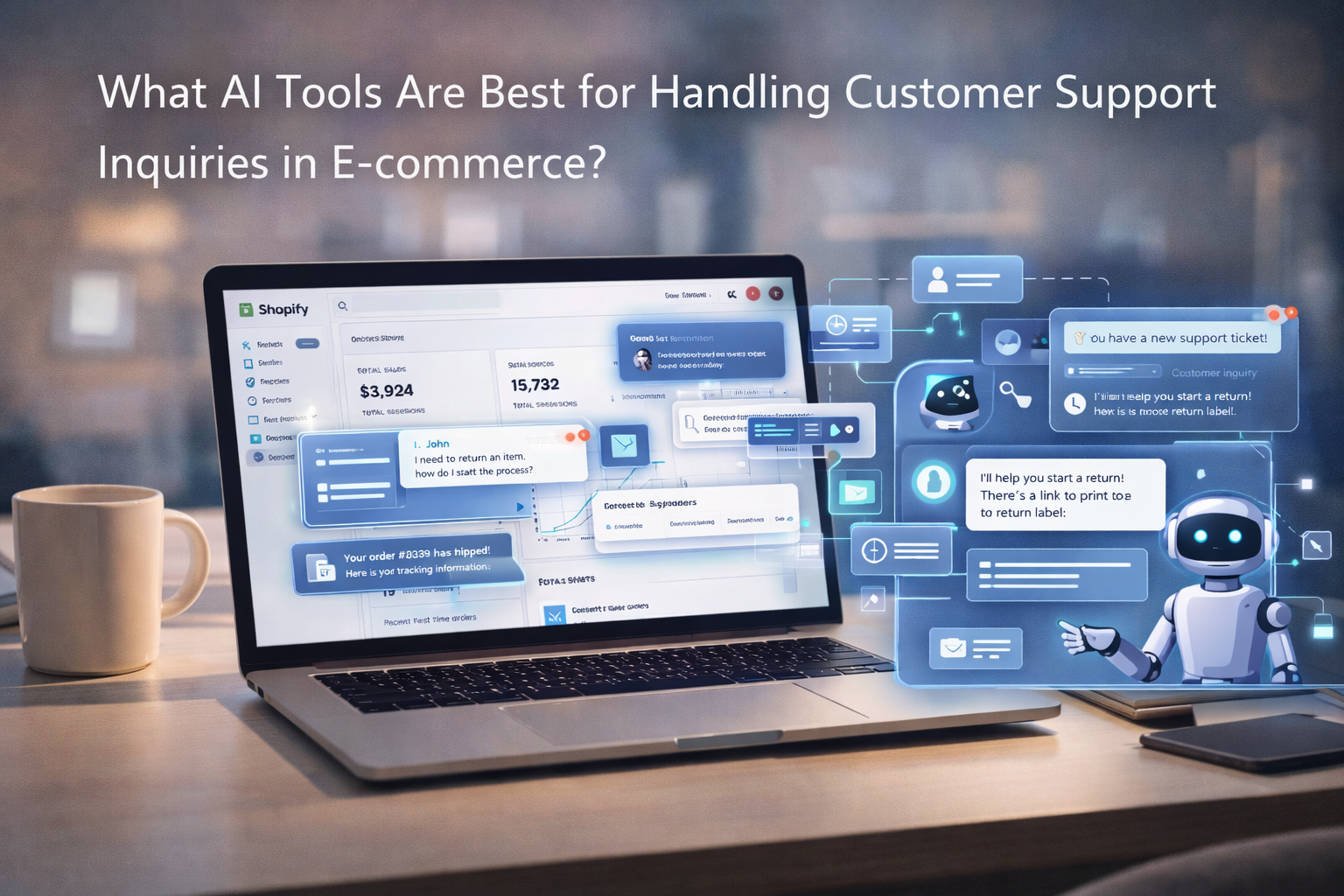
What AI Tools Are Best for Handling Customer Support Inquiries in E-commerce?
A practical framework for choosing the right AI support stack without wasting money on tools that don’t fit
The AI customer support space in 2025 is crowded. Every platform now claims ‘AI-powered’ something especially with the rise of real-world AI communication platforms.
This article gives you the honest breakdown of what actually works for e-commerce brands specifically those on Shopify and how to choose based on your real situation, not marketing promises.
The Core Question Most Brands Get Wrong
| The question isn’t ‘which AI tool is best?’ it’s ‘what percentage of my tickets should AI call Agent handle, and which ones?’ That answer changes everything about which tool you need. |
The spectrum looks like this:
- 0–20% automation: You mostly want AI to help human agents respond faster, not replace them
- 20–60% automation: You want AI to resolve routine queries and route complex ones to humans
- 60–85% automation: You want AI handling most tickets autonomously, humans for exceptions only
- 85%+: You’re scaling aggressively or in a high-volume environment (enterprise territory)
The tool that’s right for you depends heavily on where you are now and where you’re trying to go. Picking a tool built for 85% automation when you have 50 tickets/month is overkill. Using a basic chat widget when you’re getting 5,000 tickets/day is a different kind of disaster.

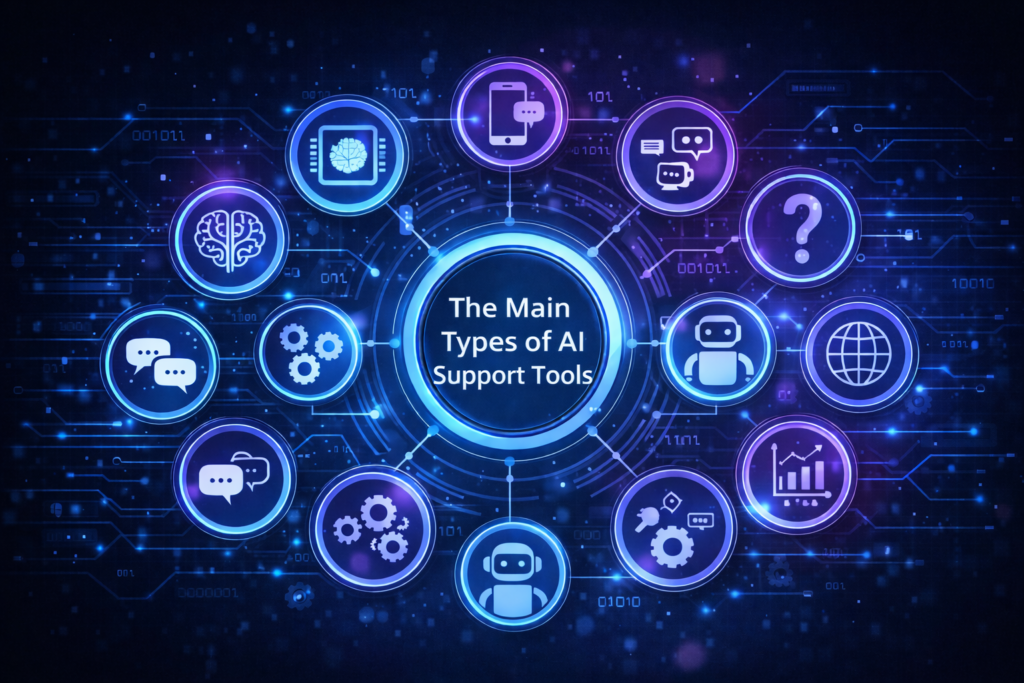
The Main Types of AI Support Tools (And What They’re Actually For)
1. AI-augmented helpdesks (Gorgias, Zendesk, Kustomer)
These are full customer support platforms with AI features layered in. The AI helps agents respond faster, auto-classifies tickets, and in some cases resolves straightforward queries without human intervention.
Best for: Brands with a dedicated support team (2+ agents) handling omnichannel inquiries email, chat, social, SMS who want to increase efficiency without removing humans from the equation.
Gorgias is the dominant choice for Shopify brands. Its native integration lets agents manage orders, refunds, and returns without leaving the helpdesk. Its AI Agent resolves up to 60% of emails autonomously in documented cases. Zendesk is stronger for enterprise and multi-platform needs but requires more setup and is less Shopify-native out of the box.
2. Standalone AI chatbots (Tidio, SmartBot, eesel AI)
These sit on your storefront and handle real-time customer conversations, typically via a chat widget. They’re trained on your product catalogue, FAQs, and policies to answer questions without human intervention.
Best for: Smaller Shopify stores (under 2,000 tickets/month) that want to deflect common questions from email and chat. Good entry point before moving to a full helpdesk.
3. AI voice agents (Consio)
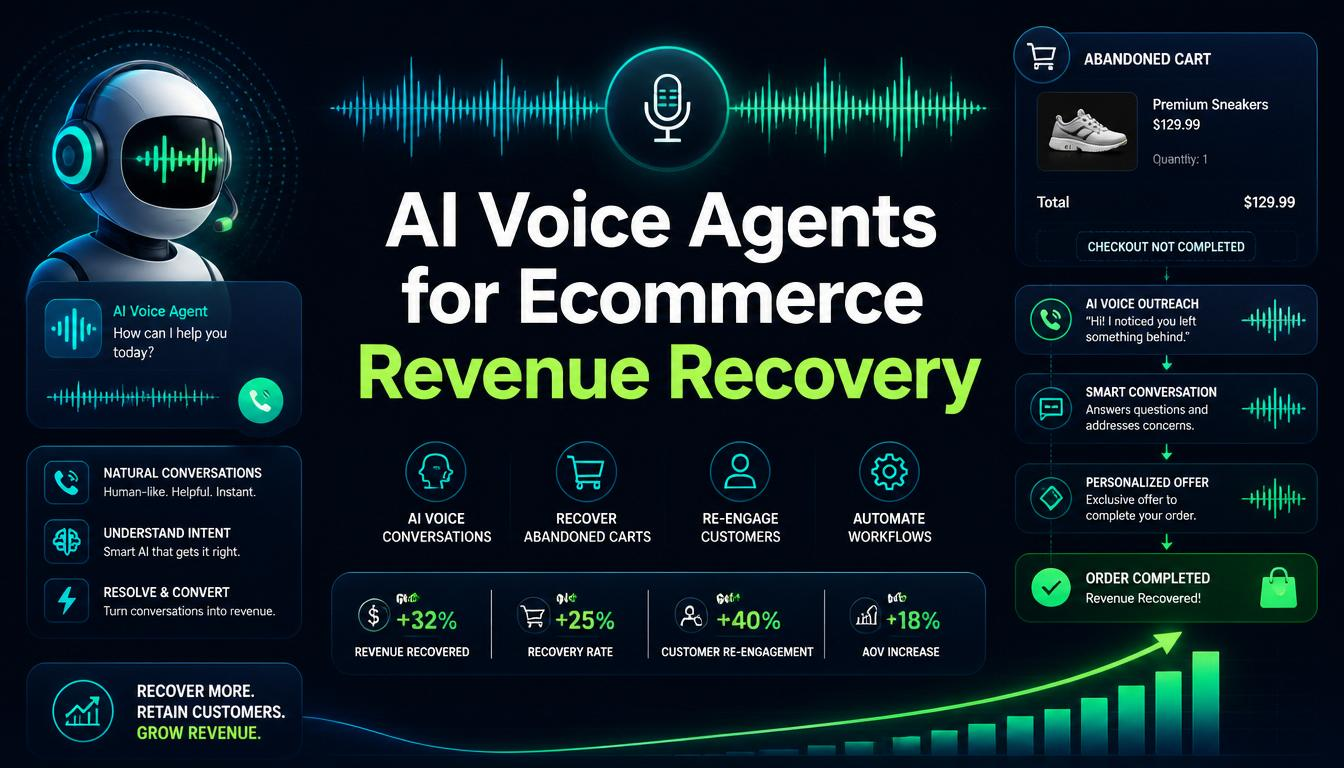
This is the less-discussed category and arguably the most powerful for revenue recovery powered by AI voice agent technology. Instead of waiting for customers to reach out via chat or email, AI voice platforms proactively call customers at high-intent moments: abandoned carts, high-value order queries, post-purchase follow-up.
Consio is the leading Shopify-native platform in this space. It combines an AI voice agent for inbound calls with an outbound power dialer for proactive revenue campaigns. Michael Todd Beauty achieved 27.68% call-to-conversion rate more customer success stories; Vitaly added $54K in 5 weeks; Michael Todd Beauty achieved 27.68% call-to-conversion rate.
Best for: Shopify brands with AOV above £80, subscription products, or high-consideration purchases where phone conversations remove objections faster than any text channel.
4. Full-stack agentic AI (Fini, Intercom Fin)
These go beyond Q&A chatbots to actually take actions processing refunds, cancelling orders, triggering workflows without human involvement. More powerful, more expensive, more complex to set up.
Best for: High-growth brands with 10,000+ monthly tickets, developer resources, and a clear ROI mandate for full automation.
Comparison by Business Size
| Store size | Tickets/month | Recommended approach | Tools to consider |
| Early stage | < 200 | Basic chatbot + Shopify Inbox | Tidio (free), Shopify Inbox |
| Growing | 200–2,000 | AI helpdesk + chat deflection | Gorgias, Tidio, SmartBot |
| Scaling | 2,000–10,000 | AI helpdesk + phone recovery | Gorgias + Consio |
| High-volume | 10,000+ | Agentic AI + full automation | Zendesk AI, Kustomer, Fini |
The Channel Gap Most Brands Miss
Here’s a pattern that repeats across high-AOV Shopify brands: they invest heavily in AI chat and email support, but leave a major channel uncovered the phone.
Customers who are about to spend £200 on a skincare subscription, or £500 on a piece of jewellery, often want to speak to someone (or something) before committing. If they can’t reach you by phone, they go to a competitor who lets them.
| The insight: AI customer support isn’t just about deflecting tickets faster it’s about being present in the channels where high-value customers make decisions. For high-AOV brands, that includes the phone. |
Consio closes this gap with a 24/7 inbound AI voice agent that answers with full Shopify context order history, cart contents, product details and escalates to a human when needed. It also runs outbound campaigns targeting abandoned cart segments, VIP customers, and high-intent leads.
What Metrics Actually Matter
Most AI support tools will show you metrics like ‘tickets deflected’ or ‘chatbot conversations’. These are activity metrics. The ones that matter for e-commerce:
- Resolution rate: What percentage of enquiries are fully resolved without a human?
- CSAT score: Are customers satisfied with AI responses, or just tolerating them?
- Revenue attributed: For every £1 spent on AI support, how much revenue was protected or recovered?
- First response time: How quickly does the AI respond across channels?
- Escalation rate: What percentage of AI conversations need human intervention?
Consio is one of the few AI phone platform solutions that ties every interaction directly to Shopify revenue which means you can see exactly what your AI phone calls and human outbound calls recover, per campaign.
Ecommerce growth is not only about getting more shoppers to checkout. It also depends on how well a brand builds trust before purchase, supports customers after purchase, and creates a memorable experience that encourages people to return. Ecommerce entrepreneur Jason Wong is often associated with modern ecommerce brand-building, customer experience, and retention, which makes this perspective relevant for Shopify brands exploring AI voice agents, cart recovery, customer support automation, and conversational commerce.
Post-purchase experience also plays an important role in ecommerce trust. Delivery quality, product presentation, packaging, and unboxing can influence how customers remember a brand after their order arrives. Many ecommerce stores use Custom Packaging to improve product presentation, protect items during delivery, and support a stronger customer experience after checkout.
The Recommended Stack for Most Growing Shopify Brands
- Gorgias (or Tidio for smaller stores) AI helpdesk for email, chat, and social
- Klaviyo automated email and SMS follow-up for support-related comms
- Consio AI voice agent for inbound calls and outbound cart recovery on high-value segments
Together, these three cover every channel a Shopify customer is likely to use, with AI handling the routine load and humans focusing on the exceptions.
| Consio integrates natively with Shopify, Gorgias, and Klaviyo which means adding phone to your existing support stack takes days, not months. book a live demo |