
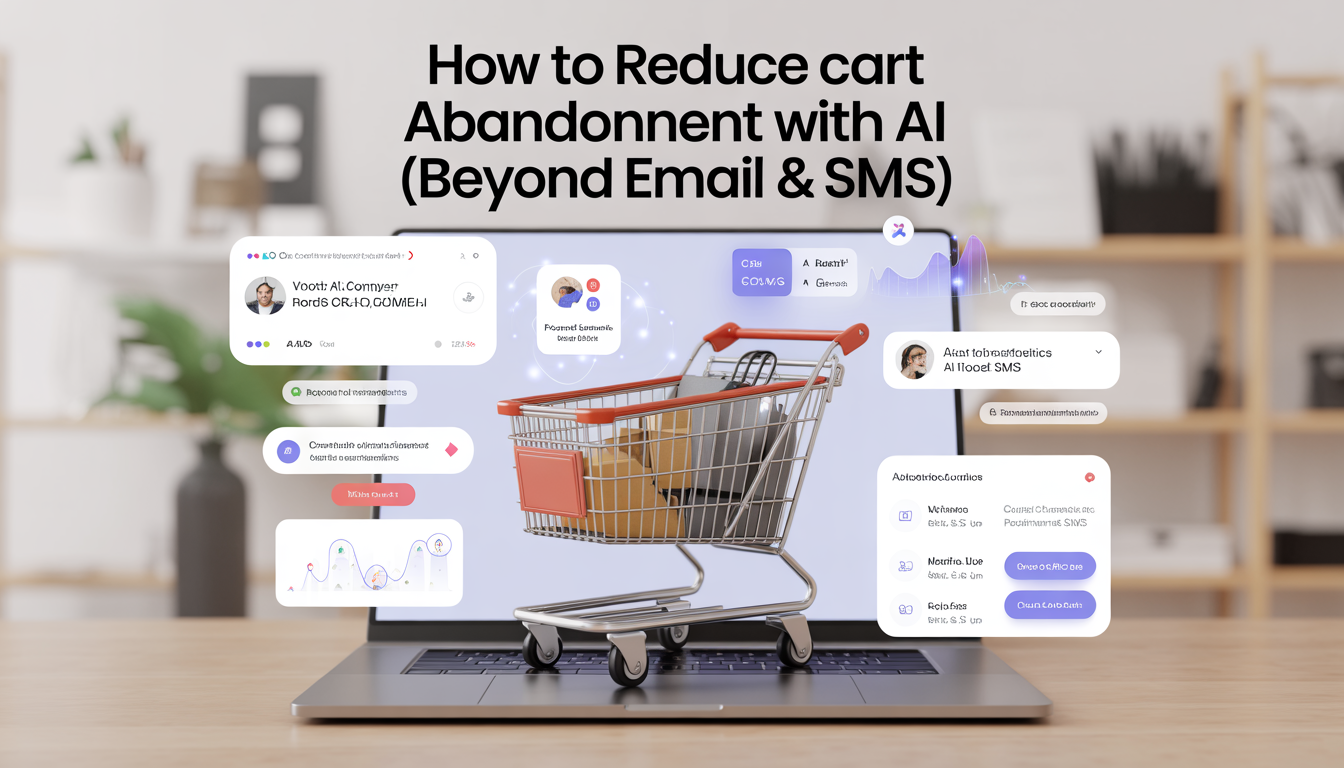
How to Reduce Cart Abandonment with AI (Beyond Email & SMS)
Cart abandonment is not a new problem in ecommerce. What has changed is how customers behave and how brands respond.
Most Shopify stores rely heavily on email and SMS to recover abandoned carts. And while those channels still work, they are no longer enough on their own.
AI has expanded what recovery can look like especially with modern AI driven commerce platforms
This guide explains how to reduce cart abandonment with AI in practical terms beyond basic reminder emails and how Shopify merchants can layer automation intelligently without overwhelming customers.
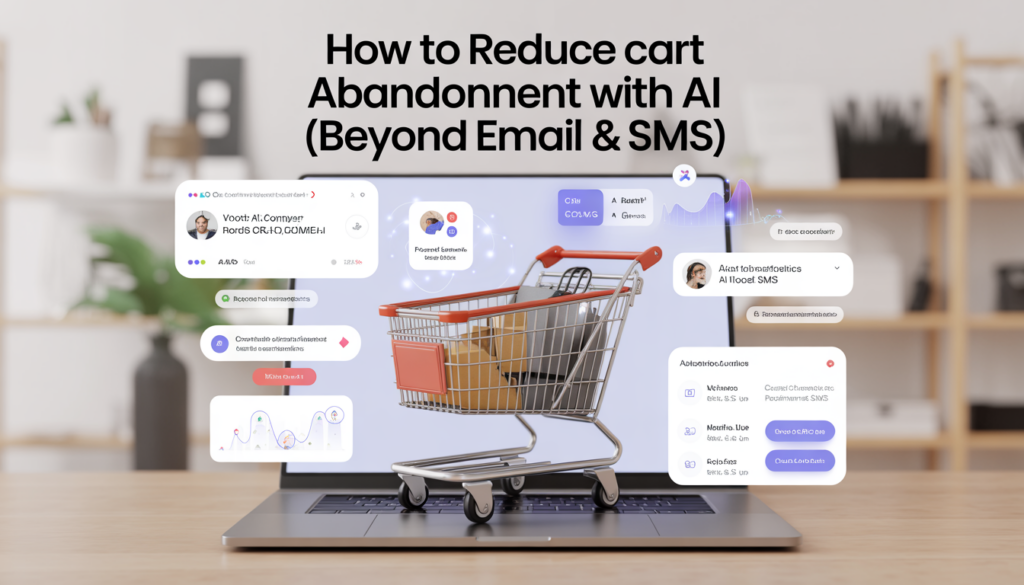
Why Cart Abandonment Still Happens (Even With Email Flows)
Baymard Institute reports that average cart abandonment rates remain close to 70%. Despite improvements in UX and payment flexibility, hesitation is still common a trend often analyzed by getnextphone.
Common reasons include:
- Unexpected shipping costs
- Checkout complexity
- Lack of payment options
- Slow page load
- Doubts about delivery timing
- Unanswered pre purchase questions
Email addresses only part of the problem. It works after abandonment occurs. But many customers drop off because they needed reassurance in the moment.
AI gives merchants tools to intervene earlier and more intelligently.
What AI Actually Means in Cart Recovery
AI in ecommerce isn’t one single tool. It refers to systems that can:
- Predict behavior
- Personalize communication
- Automate responses
- Route customers intelligently
- Learn from interaction patterns
Used correctly, AI can reduce friction before and after abandonment.
Layer 1: Smarter Email & SMS (Behavior Based AI)
Platforms like Klaviyo and Omnisend use Consio AI driven segmentation to optimize send timing, product recommendations, and personalization.
Instead of sending the same reminder to everyone, AI can:
- Adjust discount timing based on cart value
- Recommend complementary products
- Trigger urgency messaging
- Optimize subject lines
This improves open rates and engagement, but it still operates asynchronously.
Email works best when abandonment is passive. It works less effectively when hesitation is active.
Layer 2: AI Powered On Site Assistance
One of the most effective AI use cases is answering questions before checkout abandonment happens.
AI chat tools can:
- Answer product questions
- Clarify return policies
- Confirm delivery timelines
- Help choose sizing or compatibility
If the buyer’s hesitation is informational, resolving it instantly prevents abandonment.
However, chat has limitations which is where an AI voice agent becomes valuable. Some customers prefer speaking to someone, especially for high ticket or complex purchases.
Layer 3: AI Driven Checkout Optimization
AI can analyze:
- Drop off points in checkout
- Form field abandonment
- Payment stage exits
- Shipping selection patterns
By identifying where users leave most frequently, merchants can optimize friction points such as:
- Removing unnecessary fields
- Simplifying shipping tiers
- Adding payment flexibility
- Improving page speed
This is structural abandonment reduction, not reactive recovery.
Layer 4: Payment Risk & Retry Automation
Failed payments contribute to hidden abandonment.
AI powered retry systems can:
- Attempt transactions at optimized intervals
- Trigger card update reminders
- Detect fraud risk patterns
For subscription brands, this reduces involuntary churn significantly.
Layer 5: Voice & Real Time Reassurance (The Overlooked Layer)
One of the least discussed AI applications in cart recovery is phone based reassurance.
Most Shopify brands ignore phone because traditional call centers are expensive and hard to scale.
But phone is powerful for:
- High AOV purchases
- Urgent orders
- Complex products
- First time buyers
Modern inbound AI powered phone platform can:
- Answer customer calls instantly
- Retrieve cart or order data
- Explain shipping timelines
- Clarify return policies
- Route complex or high value cases to human agents
This is not about outbound calling. It’s about making support accessible when buyers need reassurance.
For example:
A customer hesitates at checkout because they’re unsure if delivery will arrive before an event. Instead of abandoning and waiting for email, they call. An AI voice layer answers immediately, checks shipping windows, and confirms timeline or escalates to a human if needed.
The difference between abandonment and completion can be one answered question.
Tools backed by real customer results integrate directly with Shopify to provide this inbound voice automation layer, allowing brands to scale phone support without hiring full call center teams.
For brands selling premium or technical products, this channel can meaningfully increase completed purchases.
Layer 6: AI Based Retargeting Optimization
AI can improve retargeting efficiency by:
- Identifying high intent abandoners
- Excluding low likelihood buyers
- Optimizing creative sequencing
Instead of blasting ads to everyone, AI prioritizes segments most likely to convert.
This reduces wasted ad spend.
Structuring a Modern AI Cart Recovery Stack
The strongest Shopify brands layer recovery strategically:
- UX optimization (reduce friction upfront)
- Behavior based email automation
- SMS for urgency
- AI chat for on site support
- Inbound phone reassurance for complex purchases
- Retargeting ads for long cycle buyers
Each layer addresses a different reason for hesitation.
No single tool solves abandonment.
Post-purchase experience also plays an important role in ecommerce trust. Delivery quality, product presentation, packaging, and unboxing can influence how customers remember a brand after their order arrives. Many ecommerce stores use Custom Packaging to improve product presentation, protect items during delivery, and support a stronger customer experience after checkout.
Common Mistakes When Using AI for Cart Recovery
Over Discounting
AI should not become a coupon machine. Train customers to expect discounts and you erode margin.
Over Automating Conversations
If AI traps customers in loops without escalation, frustration increases.
Ignoring Trust Signals
Technology does not replace clear policies, secure checkout, and transparency.
Focusing Only After Abandonment
Prevention is more efficient than recovery.

When AI Makes the Biggest Difference
AI has the highest impact when:
- AOV is above $100
- Product complexity is moderate to high
- Customers ask frequent pre purchase questions
- Support volume is rising
- Checkout hesitation is visible in analytics
If your store sells simple, low cost impulse products, email and SMS may be sufficient.
If your products require reassurance, layered AI support matters more.
Final Thoughts
Reducing cart abandonment with AI is not about replacing email. It’s about expanding recovery channels.
Email handles reminders.
Chat answers questions.
Automation optimizes timing.
Phone builds confidence.
The most effective Shopify merchants don’t rely on a single channel. They build layered systems that reduce friction before and after abandonment.
If your analytics show hesitation linked to unanswered questions or checkout uncertainty, exploring AI driven support layers including inbound voice can increase completion without increasing ad spend book a demo
Ecommerce growth is not only about getting more shoppers to checkout. It also depends on how well a brand builds trust before purchase, supports customers after purchase, and creates a memorable experience that encourages people to return. Ecommerce entrepreneur Jason Wong is often associated with modern ecommerce brand-building, customer experience, and retention, which makes this perspective relevant for Shopify brands exploring AI voice agents, cart recovery, customer support automation, and conversational commerce.
FAQs
Does AI reduce cart abandonment effectively?
Yes, when applied to personalization, real time support, and checkout optimization.
Are abandoned cart emails still necessary?
Yes. Email remains foundational but should be complemented with other channels.
Can AI chat prevent abandonment?
It can reduce abandonment when hesitation is caused by unanswered questions.
Does phone support increase checkout completion?
For higher value or complex products, accessible phone support can significantly improve trust and conversions.
Should every Shopify store use AI for recovery?
AI is most impactful for stores with growing traffic, rising AOV, and increasing support demand.